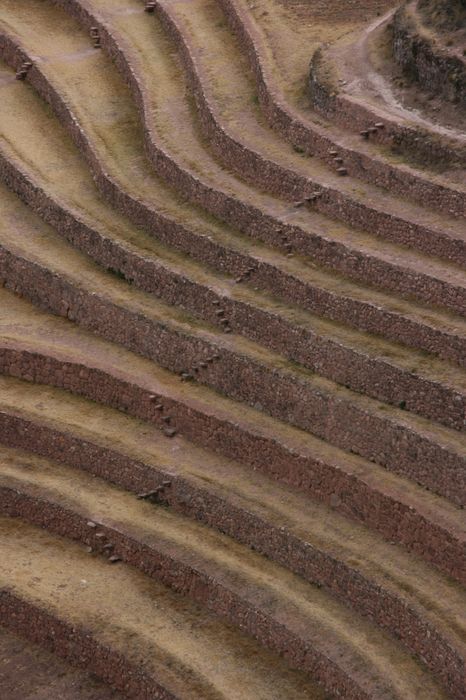
 Moray is three concentric terraced circles set
just
below a pass high up above the Urubamba
valley
with the impressive Vilcanota range as a
Moray is three concentric terraced circles set
just
below a pass high up above the Urubamba
valley
with the impressive Vilcanota range as arugged and snowy backdrop. The theory is that it was an agricultural testing ground with the terraced levels mimicking different climates: the Incans were masters of farming as well as stonemasonry.
From Moray we dropped down into the valley on hairpin bends overlooking the town of Urubamba with its busy little market. We rode past terraced slopes and donkeys before reaching Ollantaytambo. We entered the town via a steep and cobbled ramp and only then did we get a glimpse of the ruins and have to lift our heads to follow them up the side of the mountain. There were terraces again but these weren’t of any agricultural use being too narrow
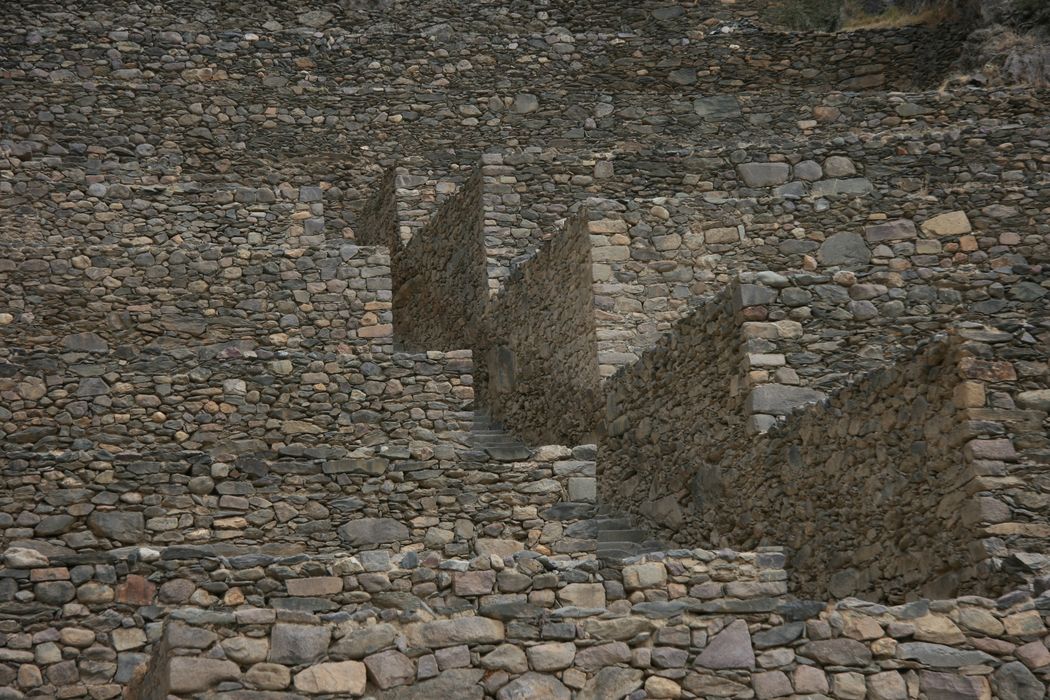 and too perfect.
We wandered around the ruins marveling at the incomplete
Temple of the Sun with its six mono- liths of cut and smoothly
fitted stones (weighing over 100 tons) and the intricate
ceremonial water channels cut into the bedrock. The mega-
lithic
details boggled the mind and we were yet to visit the most famous
and too perfect.
We wandered around the ruins marveling at the incomplete
Temple of the Sun with its six mono- liths of cut and smoothly
fitted stones (weighing over 100 tons) and the intricate
ceremonial water channels cut into the bedrock. The mega-
lithic
details boggled the mind and we were yet to visit the most famousof all Incan sites.
To get to Macchu Picchu we would take a slightly
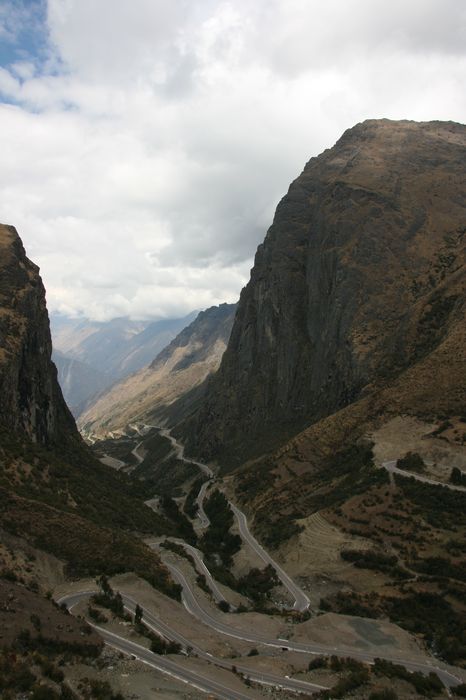 different
route that a few of the budget conscious and adventurous backpackers
were beating. Up the Sacred valley but diverging from the
train
tracks of the multitude to cross by hairpin bends a 4000m pass
descending through cloud forest into the drier, hotter valleys where
first tea then coffee were being grown on the slopes and bananas were
dominating the fields. After rattling around a bit on the rough and
stony road we opted to leave the bikes behind and go the last sections
with "micro" (or minibus) changing in Santa Maria then Santa Theresa.
The last stretch was a spectacular drive on a road gouged into the
rocky cliff of a narrow river gorge. It brought us to the last stop on
the train tracks that bring the tourists to Aguas Calientes 10km away -
the base for all who visit the ruins of Macchu Picchu.
different
route that a few of the budget conscious and adventurous backpackers
were beating. Up the Sacred valley but diverging from the
train
tracks of the multitude to cross by hairpin bends a 4000m pass
descending through cloud forest into the drier, hotter valleys where
first tea then coffee were being grown on the slopes and bananas were
dominating the fields. After rattling around a bit on the rough and
stony road we opted to leave the bikes behind and go the last sections
with "micro" (or minibus) changing in Santa Maria then Santa Theresa.
The last stretch was a spectacular drive on a road gouged into the
rocky cliff of a narrow river gorge. It brought us to the last stop on
the train tracks that bring the tourists to Aguas Calientes 10km away -
the base for all who visit the ruins of Macchu Picchu.